In nature nothing exists alone
Silent Spring“In nature nothing exists alone” is a guiding principle in Silent Spring: organisms and landscapes are bound by relations that human intervention can disturb, often with consequences far beyond its intended target. The phrase is not merely a general appeal to respect nature. Rachel Carson makes it concrete through food-chain pathways, long-evolved habitats, and the losses that follow when a control program treats a living system as though it were only a collection of removable pests or plants.
A principle of connected systems
Carson invokes the principle in considering how pollution moves through basic resources. The history of Clear Lake, California, becomes evidence that poisons introduced into water can enter nature’s cycles and pass from link to link in food chains. The question of where a pollutant travels thus expands beyond the point of application: water participates in wider ecological processes rather than remaining a sealed, local receptacle.
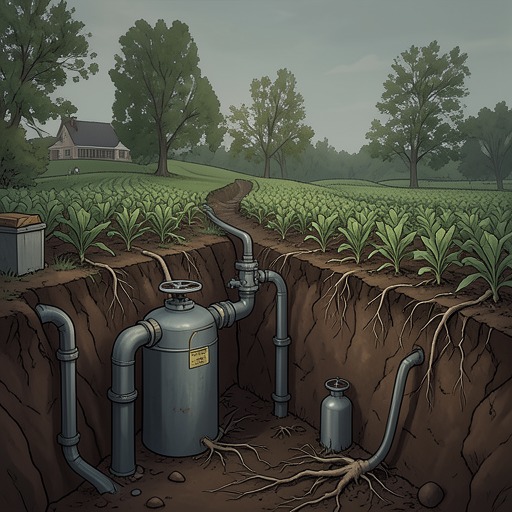
The same logic carries from water to soil. After describing how arsenic can be carried into streams, rivers, reservoirs, and groundwater, Carson returns to the idea that nothing exists alone and turns to the earth as another basic resource. The movement between chapters reinforces the argument’s structure: pollution cannot be understood by examining one substance or site in isolation, because land and water are connected routes through which its effects extend.
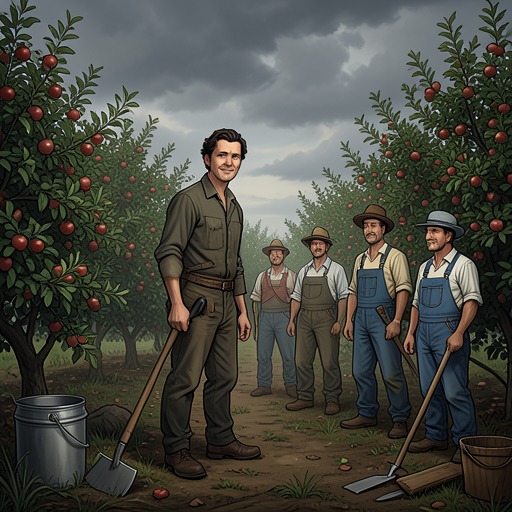
Carson states the principle most explicitly in describing vegetation as part of a web of life. Plants are intimately related to the earth, to other plants, and to animals. Sometimes people must disturb these relationships, she allows, but the disturbance should be undertaken thoughtfully and with awareness that its consequences may be remote in time and place. The warning is about both ecological connection and the limits of immediate judgment: what appears to be a local intervention may alter relations whose later effects are difficult to foresee.
Sage country and the cost of simplification
The western sage country gives those relationships a particular landscape and history. The high plains and lower mountain slopes formed through the uplift of the Rocky Mountain system and are marked by severe climatic extremes. Over long periods, the land and its vegetation developed together; animal life, too, evolved in relation to the demanding habitat. The pronghorn antelope and sage grouse are presented as creatures fitted to this country, not as incidental occupants of land awaiting improvement.
Carson contrasts that accumulated ecological fit with land-management efforts designed to satisfy cattlemen’s demand for more grazing. The desired result is grassland without sage, although the existing country supports grass mixed with and sheltered by sagebrush. The aim of replacing that arrangement with a simpler one recasts a complex habitat as an obstacle to production. In this contrast, the principle of connection becomes a critique of treating one preferred use of land as though it could be separated from the relationships that made the land what it is.
The consequences are not confined to the plants deliberately targeted. Carson describes the broader pattern of a “shotgun approach to nature”: spraying eliminates many plants that were not the intended targets. At Bridger National Forest in Wyoming, the United States Forest Service sprayed about 10,000 acres of sage lands after pressure from cattlemen. The intervention is an example of how a program aimed at changing vegetation can reach beyond its declared purpose and damage other parts of the landscape.
Collateral damage as evidence
The Bridger example sharpens the argument by tracing the loss into a neighboring habitat. Willows and the beavers dependent on them had contributed to an area valued for recreation, fishing, and hunting. Under the Forest Service’s “improvement,” the willows were killed by the same indiscriminate spray as the sagebrush. When William O. Douglas visited in 1959, the year of the spraying, he saw willows shriveled and dying. The spray’s effects therefore reached beyond the vegetation intended for removal, affecting plants on which other animals depended and changing the qualities for which people valued the area.
This logic recurs across Carson’s account of pest control. In the fall of 1959, about 27,000 acres in southeastern Michigan, including suburbs of Detroit, were dusted from the air with pellets of aldrin. Set beside the sagebrush and Bridger cases, the scale and method of this operation reinforce the concern about expansive control programs: intervention across a broad area carries consequences that cannot be confined to the organism named as its target.
The principle also lends coherence to Carson’s treatment of biological relations and control alternatives. Her account of the plant-eating beetles imported to control a weed describes insects whose lives and reproduction were adapted to that plant; by 1948, both species were established well enough that further importations were unnecessary. Elsewhere, she notes that the Japanese beetle had declined to minor importance through the importation of parasitic insects from the Far East and the establishment of disease organisms fatal to it. These examples place control within existing relations among organisms, rather than assuming that effective action must mean indiscriminate destruction.
The argument’s reach
The phrase serves as both an ecological description and a standard for judging human action. Carson’s examples connect water to food chains, soil to groundwater, plants to animals, and management decisions to consequences that can emerge elsewhere or later. The repeated movement from intention to collateral effect gives the principle its force: the intended target is never the whole system on which an intervention acts.
That argument also shapes how Silent Spring is organized. Carson moves among resources, species, and places, returning to interdependence as a way to make separate cases illuminate one another. The sage lands and the poisoned waters are not interchangeable episodes, but each tests the same assumption—that nature can be divided into isolated problems and managed without disturbing the relations around them. “In nature nothing exists alone” names the connection her examples repeatedly expose.